Sustainable Energy for your Third Year House

Ailish Lalor

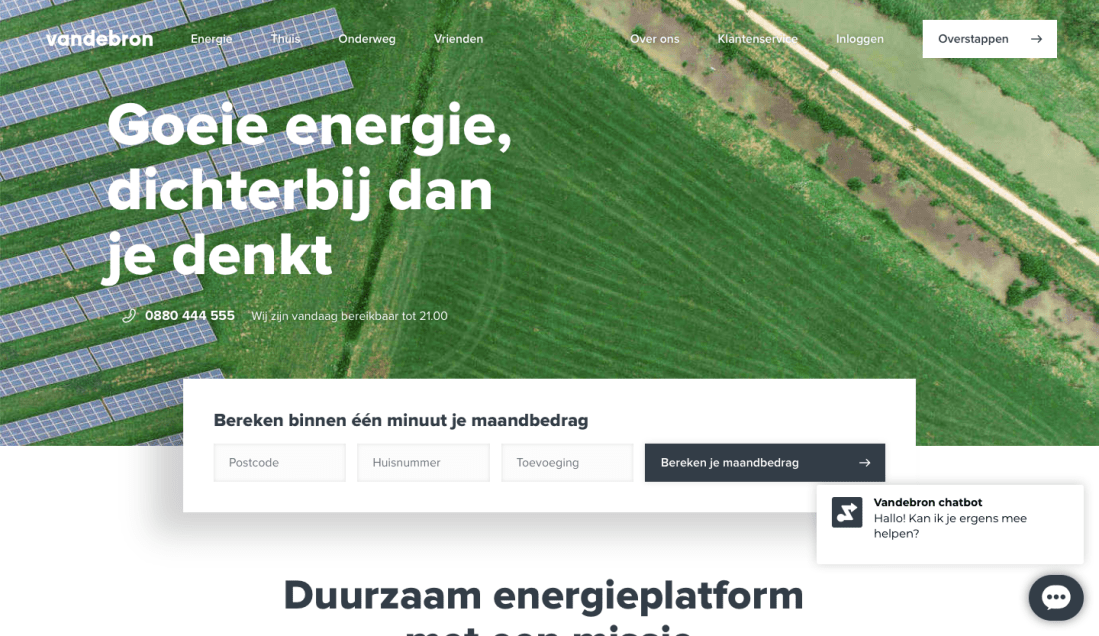
Unfortunately, we don’t have control over where our energy comes from while we still live in AvB, but in preparation for leaving the bubble, some of our second years might already be considering the electricity company they want to use to supply their house. From a sustainability perspective, we wanted to quickly draw your attention to Vandebron. 

They supply wind, solar and natural gas energy from small providers in the Netherlands. Their rates depend, of course, on your usage, but also on whether you get gas and electricity from them, or just electricity. Maria and I now pay €95 per month together, so it’s quite comparable to other electricity providers in the Netherlands— and you get to not contribute to climate change! Fun!

Their website is in Dutch, but quite logical to follow even if you don’t speak it fluently. Their customer service staff are happy to speak English with you, either through email or on the phone. For more information, be sure to check out their website here: https://vandebron.nl.

Low Impact Eating Part 3: What’s In Season?

Ailish Lalor

I genuinely learned so much from putting this blog post together, and helpfully you’ll learn things from reading it, as well. How I’ve organised things is as follows: all produce under each month is in abundant supply (and therefore should be cheap). This means it doesn’t have to be imported from far away, but might not come from the Netherlands. In bold under each month is the produce grown in North-West Europe, ie locally. As a monthly blog feature, we’ll be sharing a seasonal recipe from now onwards. 

January & February

Celery, mushrooms, bok choi, kale, potatoes, carrots, leeks, brussel sprouts, beetroot, red and white cabbage, celeriac, onions, apples, walnuts, hazelnuts.

March

Celery, cauliflower, mushrooms, bok choi, potatoes, carrots, leeks, small radishes, beetroot, red cabbage, spinach, onions, apples.

April

Cauliflower, mushrooms, potatoes, carrots, small radishes, asparagus, spinach, tomatoes, onions, butterhead lettuce, apples, rhubarb.

May

Eggplant, cauliflower, runner beans, mushrooms, green peas, potatoes, kohlrabi, carrots, small radishes, asparagus, spinach, tomatoes, white cabbage, savoy cabbage, onions, batavia lettuce, oak leaf lettuce, iceberg lettuce, curly endive lettuce, butterhead lettuce, and dandelion leaves, strawberries, rhubarb.

June

Eggplant, cauliflower, runner beans, broccoli, mushrooms, broad-beans, green peas, potatoes, kohlrabi, swiss chard, carrots, peppers, small radishes, cucumbers, asparagus, spinach, turnips, tomatoes, white cabbage, savoy cabbage, courgettes, onions, pretty much any lettuce, apricots, strawberries, currants, cherries, peaches and nectarines, rhubarb, gooseberries, watermelon.

July

Eggplant, celery, cauliflower, runner beans, broccoli, mushrooms, broad-beans, gherkins, green peas, fennel, potatoes, kohlrabi, Swiss chard, carrots, sweet pepper, leeks, purslane, small radishes, big radishes, cucumbers, turnips, tomatoes, courgettes, onions, any lettuce, apricots, blackberries, strawberries, blueberries, currants, cherries, plums, peaches, nectarines, cranberries, gooseberries, watermelon, grapes.

August

Eggplant, celery, cauliflower, runner beans, broccoli, mushrooms, broad-beans, bok choi, gherkins, green peas, fennel, potatoes, kohlrabi, pumpkin, Swiss chard, carrots, peppers, parsnips, leeks, purslane, radishes, cucumbers, tomatoes, sweet corn, courgettes, onions, lettuce, apples, apricots, pears, blackberries, blueberries, raspberries, currants, cherries, plums, peaches and nectarines, cranberries, gooseberries, watermelon, grapes.

September

Eggplant, celery, cauliflower, runner beans, broccoli, mushrooms, bok choi, gherkins, fennel, potatoes, kohlrabi, pumpkin, Swiss chard, horseradish, carrots, peppers, parsnips, leeks, purslane, radishes, beetroot, red cabbage, cucumbers, celeriac, spinach, tomatoes, Jerusalem artichoke, white cabbage, savoy cabbage, sweetcorn, courgettes, onions, lettuce, apples, pears, blackberries, elderberries, peaches, nectarines, plums, cranberries, watermelon, grapes, walnuts, hazelnuts, chestnuts.

October

Celery, cauliflower, runner beans, broccoli, mushrooms, chicory, bok choi, gherkins, fennel, potatoes, kohlrabi, pumpkin, horseradish, carrots, peppers, parsnips, leeks, radishes, Brussels sprouts, beetroot, red cabbage, cucumber, celeriac, spinach, turnips, tomatoes, Jerusalem artichokes, white cabbage, savoy cabbage, sweet corn, courgettes, onions, iceberg, endive, lamb, butterhead and radicchio lettuce, apples, pears, elderberries, peaches and nectarines, quinces, cranberries, watermelon, grapes, walnuts, hazelnuts, chestnuts.

November

Celery, cauliflower, mushrooms, chicory, bok choi, fennel, kale, potatoes, pumpkin, horseradish, carrots, sweet pepper, parsnips, leeks, Brussels sprouts, beetroot, red cabbage, celeriac, turnips, tomatoes, Jerusalem artichokes, white cabbage, savoy cabbage, courgettes, onions, lamb’s lettuce, apples, pears, quinces, grapes, walnuts, hazelnuts, chestnuts.

December

Celery, mushrooms, chicory, bok choi, kale, potatoes, pumpkin, carrots, leeks, Brussels sprouts, beetroot, red cabbage, celeriac, white cabbage, savoy cabbage, onions, lamb’s lettuce, apples, walnuts, hazelnuts. 

I genuinely learned so much from putting this blog post together, and helpfully you’ll learn things from reading it, as well. How I’ve organised things is as follows: all produce under each month is in abundant supply (and therefore should be cheap). This means it doesn’t have to be imported from far away, but might not come from the Netherlands. In bold under each month is the produce grown in North-West Europe, ie locally. As a monthly blog feature, we’ll be sharing a seasonal recipe from now onwards. 

January & February

Celery, mushrooms, bok choi, kale, potatoes, carrots, leeks, brussel sprouts, beetroot, red and white cabbage, celeriac, onions, apples, walnuts, hazelnuts.

March

Celery, cauliflower, mushrooms, bok choi, potatoes, carrots, leeks, small radishes, beetroot, red cabbage, spinach, onions, apples.

April

Cauliflower, mushrooms, potatoes, carrots, small radishes, asparagus, spinach, tomatoes, onions, butterhead lettuce, apples, rhubarb.

May

Eggplant, cauliflower, runner beans, mushrooms, green peas, potatoes, kohlrabi, carrots, small radishes, asparagus, spinach, tomatoes, white cabbage, savoy cabbage, onions, batavia lettuce, oak leaf lettuce, iceberg lettuce, curly endive lettuce, butterhead lettuce, and dandelion leaves, strawberries, rhubarb.

June

Eggplant, cauliflower, runner beans, broccoli, mushrooms, broad-beans, green peas, potatoes, kohlrabi, swiss chard, carrots, peppers, small radishes, cucumbers, asparagus, spinach, turnips, tomatoes, white cabbage, savoy cabbage, courgettes, onions, pretty much any lettuce, apricots, strawberries, currants, cherries, peaches and nectarines, rhubarb, gooseberries, watermelon.

July

Eggplant, celery, cauliflower, runner beans, broccoli, mushrooms, broad-beans, gherkins, green peas, fennel, potatoes, kohlrabi, Swiss chard, carrots, sweet pepper, leeks, purslane, small radishes, big radishes, cucumbers, turnips, tomatoes, courgettes, onions, any lettuce, apricots, blackberries, strawberries, blueberries, currants, cherries, plums, peaches, nectarines, cranberries, gooseberries, watermelon, grapes.

August

Eggplant, celery, cauliflower, runner beans, broccoli, mushrooms, broad-beans, bok choi, gherkins, green peas, fennel, potatoes, kohlrabi, pumpkin, Swiss chard, carrots, peppers, parsnips, leeks, purslane, radishes, cucumbers, tomatoes, sweet corn, courgettes, onions, lettuce, apples, apricots, pears, blackberries, blueberries, raspberries, currants, cherries, plums, peaches and nectarines, cranberries, gooseberries, watermelon, grapes.

September

Eggplant, celery, cauliflower, runner beans, broccoli, mushrooms, bok choi, gherkins, fennel, potatoes, kohlrabi, pumpkin, Swiss chard, horseradish, carrots, peppers, parsnips, leeks, purslane, radishes, beetroot, red cabbage, cucumbers, celeriac, spinach, tomatoes, Jerusalem artichoke, white cabbage, savoy cabbage, sweetcorn, courgettes, onions, lettuce, apples, pears, blackberries, elderberries, peaches, nectarines, plums, cranberries, watermelon, grapes, walnuts, hazelnuts, chestnuts.

October

Celery, cauliflower, runner beans, broccoli, mushrooms, chicory, bok choi, gherkins, fennel, potatoes, kohlrabi, pumpkin, horseradish, carrots, peppers, parsnips, leeks, radishes, Brussels sprouts, beetroot, red cabbage, cucumber, celeriac, spinach, turnips, tomatoes, Jerusalem artichokes, white cabbage, savoy cabbage, sweet corn, courgettes, onions, iceberg, endive, lamb, butterhead and radicchio lettuce, apples, pears, elderberries, peaches and nectarines, quinces, cranberries, watermelon, grapes, walnuts, hazelnuts, chestnuts.

November

Celery, cauliflower, mushrooms, chicory, bok choi, fennel, kale, potatoes, pumpkin, horseradish, carrots, sweet pepper, parsnips, leeks, Brussels sprouts, beetroot, red cabbage, celeriac, turnips, tomatoes, Jerusalem artichokes, white cabbage, savoy cabbage, courgettes, onions, lamb’s lettuce, apples, pears, quinces, grapes, walnuts, hazelnuts, chestnuts.

December

Celery, mushrooms, chicory, bok choi, kale, potatoes, pumpkin, carrots, leeks, Brussels sprouts, beetroot, red cabbage, celeriac, white cabbage, savoy cabbage, onions, lamb’s lettuce, apples, walnuts, hazelnuts. 
Low Impact Eating Part 2: Where to Shop

Ailish Lalor

In the last blog post we talked about meal planning and how that can help us to reduce food waste, but another important part of eating sustainably is buying locally produced and seasonal food. Because we’re not always organised enough to go to Lekkernassuh— although it is undoubtedly the most sustainable option— we’re going to explore how we can utilise regular supermarkets to achieve the goal of low impact eating. If you haven’t seen our blog post on Lekkernassuh, check it, and the store itself, out as soon as possible.

  1. Albert Heijn

AH is ubiquitous in the Netherlands, which means that we often come to depend on it solely as our food source. It’s definitely one of the most challenging places to go for food that is package free, or at least plastic free. Most of its vegetables, fruits, snacks, cereals, pre-made food and drinks voluminous sources of plastic packaging, but there are a few things you can do to reduce what you bring home. Create meals centred on the vegetables that are package free— peppers, zucchinis, green beans, cauliflower and fennel bulbs are usually a good bet. The fruits are also fairly easy to figure out: there is usually an option to get bananas without plastic, as well as apples and pears. For some reason, AH refuses to stock mandarins without the net— at least at Dierenselaan. If you’re shopping for grains or flour, the best you can do is buy things packaged in paper and cardboard. Flour, oats, rice, and sugar, for example, are available this way. For pasta, go for the package mostly made from cardboard with the small plastic window. As far as I know, it’s the best you can do. When it comes to bread, try to choose the unpackaged ones and use your own bags. Premade foods and juices are unavailable without plastic, sadly.

2. Ekoplaza

Pretty and pricy, Ekoplaza is always someplace I enter with a mixed bag of emotions: delight, and a sense of impending poverty. But I do it pretty much weekly, because it offers organic food, mainly plastic free. All its fruits and veggies, down to the mushrooms and the cranberries, can be found without any packaging. If you bring your own bags, you won’t need the paper ones they provide— although they’re not a bad option if you forget them or underestimate just how many things you want. I also like that they indicate clearly where each fruit or vegetable comes from: AH also does this, but in really small writing on the bottom of the packaging. You can use this information to go for things grown in the Netherlands, or at least in Europe. They also have a bulk cereals section, where you can get seeds, nuts, dried fruits and cereals in your own bags or, again, their paper ones. Lots of their premade soups and sauces are in glass rather than plastic, and they have recently introduced a compostable plastic alternative, which they use for their breads and some chocolates. You can also go for the cardboard and aluminium foil packaged chocolates (in case you hadn’t noticed, this is a real point of concern for me). 

3. De Haagse Markt

Never let it be said that I don’t hit as many price points as possible in a blog post. The Hague Market is cheap and fairly cheerful, so long as you don’t mind crowds. You can get pretty much everything plastic free here as well— just bring your own bags and let the stall owner know. You can also buy nuts without plastic, although sadly not the nut butters. Some salad leaves and greens like boy choi do also tend to come in plastic, but this is a problem common to Ekoplaza and Lekkernassuh as well, so we can’t really blame them. There is also a lady who sells bulk beans in plastic bags, and the olive stall usually insists you at least reuse one of their plastic pots (although it’s definitely great that you can reuse them). One small problem with the market is that you can’t tell what has been grown where, so it’s best to go with what you know will be in season (see next week’s blog post for a run down of that) and hope for the best.

In addition to these three big players, there are other smaller markets, such as the Organic Market on Wednesdays and Lekkernassuh (also on Wednesdays). These have been covered before in our master blog post of sustainable tips and our special Lekkernassuh post. Be sure to check those out if you’re curious!

Seasonal Recipes February: Stuffed Baked Potatoes with Roasted Brussel Sprouts

As promised, here is the first of our monthly recipe series featuring seasonal produce. Sometimes, even when you know what is in season at a particular time, it can be hard to figure out how to put seemingly random vegetables together to create a meal that, um, isn’t soup. We’re keeping these recipes as cheap and simple as we can, but we’re also of the opinion that food should taste really, really good first and foremost. 

If you haven’t seen our blog post on seasonal produce from last week, check it out here! In any case, the vegetables that are in season in the Netherlands in February are mushrooms, kale and Brussels sprouts; and in Europe in general celery, potatoes, carrots, leeks, beetroot and cabbage. Obviously, a whole meal can’t come from these vegetables, but they are the centrepiece of the dish (or some of them, in any case).

Without further ado, here is our recipe for roasted Brussels sprouts, baked potatoes and a lentil and mushroom topping for said potatoes.

Ingredients:

2 large potatoes

2 tbsp olive oil

Salt

Smoked paprika

Two handfuls of Brussels sprouts

150g mushrooms, chopped finely

1 can of lentils, or 1.5 cups cooked (they must be cooked in advance!)

1 tbsp soy sauce

1/2 tbsp balsamic vinegar

1 tsp cumin

1/2 tsp turmeric

1 onion

1 cloves garlic

  1. Preheat your oven to 200 degrees, and line a baking tray with come greaseproof paper or a reusable baking mat.
  2. Give the potatoes a wash and then, when the oven is hot enough, put them on the baking tray. Stab them viciously, or gently, with a fork a few times each, to let the steam out while they cook. Bake in the oven for twenty minutes.
  3. In the meantime, prepare the sprouts. Take off the top layer of leaves of the Brussels sprouts and cut them in half. Put them in a bowl with a tablespoon of olive oil, some salt and some smoked paprika. After the potatoes have baked for twenty minutes, add the Brussels sprouts to the same tray and bake both together for a further twenty minutes. The sprouts should be golden brown on the tips of the leaves when they’re done, and perfectly soft inside.
  4. During this final twenty minutes’ baking, prepare the stuffing for the potatoes. Fry off the onion and garlic in some olive oil until softened and golden brown, and then add the mushrooms and lentils. Add the soy sauce, balsamic vinegar and spices. Cook until the mushrooms are soft.
  5. When the potatoes and Brussels sprouts are done, allow them to cool for five minutes. Split the potatoes lengthwise down the middle so that you can stuff them with the mushroom and lentil mixture. Then add the Brussels sprouts on top, or separately on the plate, as you wish. You can also add fresh leaves, tomatoes or avocados, but none of these are in season at this time of year, so we haven’t included them in this recipe. 

Low Impact Eating Part 1: Meal Planning

Ailish Lalor

One of the simplest ways of reducing your food waste is by planning what you will eat in a week before going grocery shopping. While most people will at least think about what they might need before departing to AH or the Haagse Markt, planning your weekly eating in detail will further help you to reduce food waste, cut costs, and minimise the number of emergency AH To Go visits you need to make. When I plan for the week, I tend to think in terms of breakfast, lunch, dinner and snacks, and plan something for each of these categories each day.

For me, breakfast tends not to vary a lot, because early morning is not a culinarily creative time for me. I go with oats, soy milk, and fruit in this category, and if I’m running out of my dried toppings, such as seeds or nut butters, I’ll also be sure to replenish those. For the weekend, I usually plan on having something a bit more exciting, like french toast or scrambled tofu. 

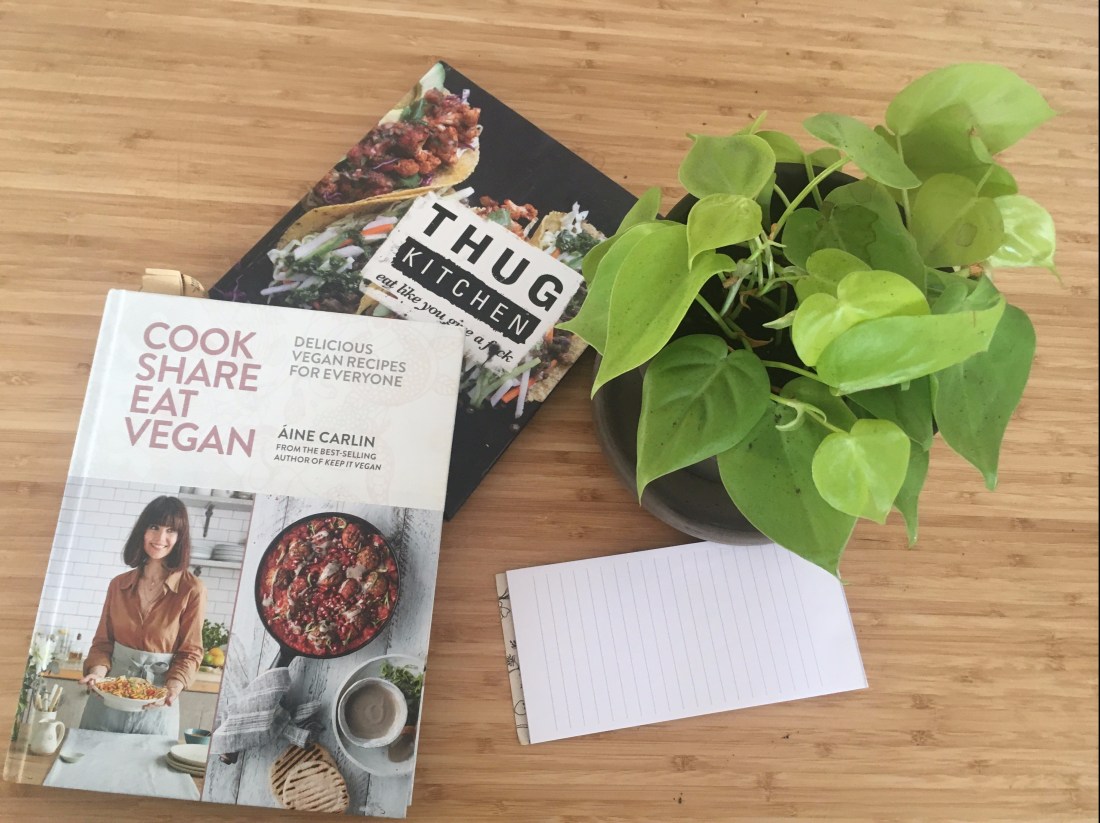
Lunch and dinner are where most of my planning comes in, because I do very much enjoy cooking when I’m awake. Usually I pick three or four recipes from my cookbooks or online food blogs that I’d like to make throughout the week. I’ll write down all the ingredients needed, and then examine which of them will not be fully used by the recipe. For example, this week I made a butter bean jalfrezi that called for two sticks of celery: but to my infinite disgust, no supermarket sells celery in stick format. Usually, there’ll be several of these ingredients each week. I then create a recipe that will use up all of these ingredients. The aforementioned celery was used up in what I call a ‘Granny Stew’— carrots, potatoes, stock and either beans or seitan. If you prefer not to experiment with recipes and would rather stick to ones you know and love, then feel free to ignore this step.

Planning snacks is still something I struggle with, because for some reason my optimistic planning brain thinks I will be contented with one (1) bar of chocolate a week. My tip here would be to be realistic, and to purchase ingredients for making things like brownies and cakes from scratch. These items are not perishable, usually, so you can have them in your cupboard and not actually use them if you don’t need to. 

Next week’s post will detail where to buy different types of food, each in the most sustainable way. Be sure to check it out, and let us know if you have any other tips for reducing food waste!

Low Impact Cleaning Part 3: All Purpose Cleaner

Ailish Lalor

In the final part of our household cleaning series, we’re going to give you a recipe for a multi-purpose cleaner that is package free, gentle on the environment, and delicious smelling. Full disclosure, this recipe is pretty much exactly the same as others on the internet, but we can guarantee for you that it worked for us, and we really enjoyed the potion-y feeling making it gave us.

Ingredients:

White or apple cider vinegar

Water

Essential oils

Equipment: 

An old spray bottle

Steps:

  1. Take equal amounts of water and vinegar, and pour them into the spray bottle. If you have a funnel, it would probably be very useful here, but it’s not necessary. I chose to use about half a cup of each, which filled up the spray bottle. 
  2. Add 5 drops of whichever essential oil you choose— I went with lavender. A word of warning: if you have pets, do check if the oils you choose are suitable for use around pets. Lavender and eucalyptus, for example, can be toxic to cats.
  3. Put the cap on the bottle and shake to combine. It’s worth doing this before every use, as the essential oils can separate. 

To use, simply spray the cleaner onto whatever surface you’re trying to clean. If you’re working with stains that are harder to remove, let the cleaner sit for a couple of minutes before scrubbing. I recommend using cotton cloths, or a levenzonderafval.com cleaning scrubber, to combine with this spray. 

Our next series on the blog will begin next week: eating sustainably! Of course, we’ve talked about this before, but we’re planning on discussing some different topics this time: avoiding food waste, which grocery stores are best for which types of groceries, and so on. Be sure to join us then!

In Which Ailish Waxes Lyrical About Lekkernassuh

Ailish Lalor

[AN: I was completely convinced that I had uploaded this blog post literal months ago, but I did not. So here it is.]

When you walk into warehouse where the Lekkernassuh market is held each Wednesday, your immediate impression is that you’ve stepped back in time. I think most of us at LUC have grown up in a world where all types of food are available nearby in the one supermarket, where the cashiers are anonymous or mechanical, and where you’ll need to do your research if you want to know exactly where something comes from, or how it’s made. And I, at least, have this constant sense of missing out, just barely, on a world where this is not the case. My parents, and certainly my grandparents, knew the people they bought their groceries from, and to varying degrees, knew where the food came from. Although you can’t be nostalgic for something you haven’t experienced, I am. And this is why I felt so intensely happy when I discovered Lekkernassuh.

It was through a friend, as these things usually are; and I wasn’t really expecting much the first time I went. But when I walked in the door, I knew already that I had found something special. When you enter, you begin on your left by picking up the vegetables you’ve ordered the Sunday before. You don’t know what these vegetables are going to be, precisely; only that they’re organic and grown within the Netherlands as close to The Hague as possible. You weigh them out yourself, as well, and you have to bring your own bag. I suggest bringing several bags to avoid crushing your produce. While there are people there to help you, if you need it, you’re more or less left to your own devices. You feel both peaceful and adopted immediately into the community.

For me, the high point of the Lekkernassuh experience is the package free goods section. You can get almost anything you might need here, from spelt flour to red lentils to apple cider vinegar. Once you bring your own containers or bags, all will be well. They needn’t even be particularly conventional containers: currently I have agave syrup stored in an old vegetable stock jar, and soy sauce in a plastic bottle that was once filled with dried strawberries. The people who help you at this section are utterly lovely, too. They were really patient with my overly detailed list of things I wanted and didn’t mind that I took up a lot of their time. Buying your food like this, in a way where you can talk to and make connections with the people who are selling it (and in some cases, who have even grown it) was for me a completely new way of grocery shopping. There’s such satisfaction in it, in knowing that you’re not damaging the planet with plastic or goods from the other side of the world.

There’s also something exciting, as someone who loves to cook, with not being able to decide what you get. It really pushes you to look at the vegetables and fruits individually, rather than as mere ingredients on a list. Last week, I ended up with a vegetable I had never seen before: poor man’s asparagus. Learning how to cook it— and indeed what it was— has been a really rewarding process. Oftentimes, when people suggest ways of eating more healthily, they veer towards the simplest possible way: a method which, of course, makes sense. I think though that if you want to eat food that’s good for you consistently, you need to fall in love with it in some way. Going to a market like Lekkernassuh, where you’re handed a bunch of vegetables you might not be entirely familiar with, is surprisingly a good way to do this. You might end up finding that vegetables are not something you have to force down your throat, or eat merely to have a balanced diet. You might find, in fact, that you end up enjoying cooking and eating them. And that, I think, is the way to a good way of eating. 

Low Impact Cleaning Part 2: Drains

In last week’s blog post, we discussed how you can do your dishes in a sustainable way. This week, we’re all about baking soda and vinegar as we explore the exciting topic of keeping the drains clear. We well remember the cantankerous nature of the AvB drains, so hopefully these tips will help those of you who still live there, although we haven’t tried them out there personally. Luckily for you, our third year accommodation still has weird plumbing, so keeping drains clear in a sustainable, eco-friendly way has been something we’ve been trying to figure out.

First, some obvious things: clear your shower drain of hair regularly! We don’t have any sustainable alternative to this, so be sure the drain is free from obvious debris (and yes, this will always be disgusting, but adult life is disgusting as whole) before using the tricks below. If you’re dealing with a kitchen sink, be sure to remove any small bits of food before as well. 

Now, onto the recipe. To do this, you will need baking soda at the very least. You can get this package free at Lekkernassuh, or in a compostable bag from levenzonderafval.com. It is possible to do this trick just with baking soda and hot water, so we’ll explain this way first.

Take two-three tablespoons of baking soda and put it on the drain. Basically, you should put enough baking soda there so that you can see a good amount perched on the top of the drain. Next, gently pour some boiling water over the plug hole. This should wash the baking soda down and allow it to clean the drain as it does so. The boiling water will also help to kill bacteria in the drain, which will reduce any bad smells.

The second option involves a combination of vinegar and baking soda, and is frankly much more amusing than the first trick because it involves fizz. Put the same amount of baking soda in the drain as before, but this time wash it down with vinegar. The advantage of this tip, apart from the amusement factor, is that it allows you to check all the baking soda has gone down. If you add more vinegar and a second bout of fizzing occurs, the baking soda has not yet completely washed down the drain. Leaving baking soda to sit in the drain will, in fact, increase the chance of it becoming blocked rather than reducing it. 

If you have a proper drain blockage— that is, no water is flowing down the drain at all— you will need to take some different steps before bringing out the baking soda. First, use your hand— gloved if you prefer— to dig around in the drain. Most likely, you will be able to catch hold of hair or gunk of some kind. Pull it out and put it in a bin. This is disgusting, but also very satisfying. 

If this fails to get water flowing, invest in a plunger. WikiHow has a great tutorial on how to use one, so I won’t repeat it here. At all costs, avoid buying chemical treatments to clear drains: if they’re strong enough to clear debris from a pipe, they’ll be sure to clear any living creatures in the water system they end up in as well. Fish are friends, not victims of chemical attacks.

Low Impact Cleaning Part 1: Doing the Dishes

Ailish Lalor

Cleaning things is important: but oftentimes the products we are encouraged to buy for cleaning and washing our homes, dishes and clothing are pretty terrible for the environment. They come in heaps of plastic packaging and contain ingredients that damage our water systems. Over the past few months, I’ve been experimenting with ways of improving the products I use to clean, and as I’m now quite happy with what I’ve done, it’s time to share. The next couple of blog posts will detail more sustainable ways of doing the laundry, keeping those drains clear, and surface and bathroom cleaning. This one, as you may have surmised from the title, is about doing the dishes.

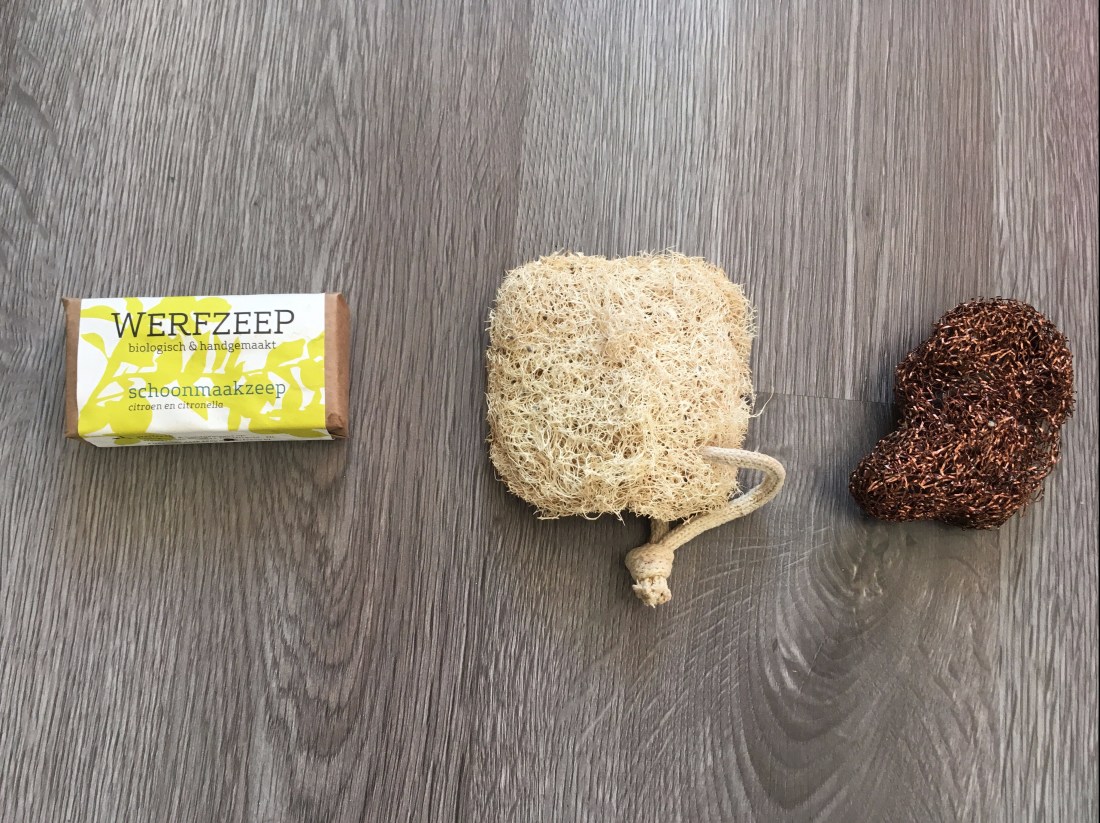
First, you need dish soap. For the past few months I have been happily using Werfzeep’s ‘Cleaning Soap’, scented with lemon and citronella. The soap is solid and comes wrapped in brown, compostable paper, is palm oil free, and fully biodegradable. The bars last an astonishingly long time: we have been using ours for nearly four months now, and only just over half of it is gone. For €4,25 apiece, it’s very reasonable as well. You can find it here: https://www.werfzeep.nl/en/cleaning-soap.html or at LekkerNassuh.

Then you need a sponge. While a lot of zero waste bloggers tend to favour the aesthetically pleasing wooden brushes, which are also a nice option (the head can be composted when it needs to be changed, and the handle is reused with a new head), we wanted to go with something as close to a dishwashing sponge as possible. I chose one from levenzonderafval.com which is fully compostable when used and made from a natural sponge. As you probably already know, the normal washing up sponges are made from plastic and do not decompose. This sponge is also not dyed and works well for removing almost all dirt: it does struggle with burnt bits and oatmeal. 

That’s where the copper scrubber comes in. Also from levenzonderafval.com, it’s made completely for copper and so is completely recyclable at the end of its lifetime. Just for the record, these are really beautiful objects, I’m quite obsessed. They look like Christmas tree decorations (I know it’s January, leave me alone). They’re soft enough to scrub your dishes and glasses without scratching them, but they remove everything, even oatmeal. 

With these three things, our dish washing regime only needs motivation to be complete, but sustainability can’t help us there. Tune in next week to learn how we keep our very odd plumbing in working order. Wild. 

Five Sustainable Influencers

Ailish Lalor

Happy New Year! After a semester-long hiatus purely owing to my procrastination skills, the blog is back, and will hopefully continue to be back. Please shout at me if I fail. 

Although the time for making New Year’s Resolutions has passed (by now you should be onto the disappointing-yourself-and-your-family-and-your-dog phase), I wanted to begin this comeback with a list (and description thereof) of some YouTubers, Netflix programmes and bloggers that support sustainability and have certainly helped me become less wasteful over the past year. So, even as you procrastinate achieving the goals you set yourself a week ago, you can be inspired to set some more for yourself. Joking aside, I do think that hearing other people talking about things you also want to do and showing you how to do them helps with following through. Since beginning to follow some of these people, I’ve been able to cut down a lot of plastic usage and new clothing. Hearing a message you know to be true repeated to you in an entertaining way is actually quite helpful, I find. Without further ado, here are five people/programmes that I have found helpful with sustainability.

  1. Sustainably Vegan

Sustainably Vegan is the channel that really altered how I think about sustainability. I’ve been watching Immy, the owner, for about six months now, and I’m constantly inspired by her ideas. She calls her movement ‘low impact living’, and it encompasses lowering your physical waste, but also your ‘invisible’ waste, so choosing to cycle over public transport or driving, sourcing locally grown food and locally made goods, and buying as much second hand as possible. She’s also unusually intersectional for the sustainability community (which I appreciate as an HD major), and does videos on being low waste in areas with limited options, doing no-spend months, and being self-employed. Also, her videos are always beautifully shot and edited. Find her here: https://www.youtube.com/channel/UCkq2gEWE-i647M71bh7zDxA

  1. Shelbizleee

Shelby, who runs this channel, was my first introduction to the ‘zero waste’ movement. She does videos about cutting down your plastic use, eco-friendly alternatives to toiletries and make up, and some videos that are mostly about entertainment— for example, her anti-haul videos, where she lists wasteful trends that annoy her. She lives in the States, so not everything she mentions can be found here, but I find her simultaneously reassuring and inspirational. Find her here:https://www.youtube.com/user/Shelbizleee

  1. Lazy Cat Kitchen

Lazy Cat Kitchen is the blog I go to whenever I want to cook or bake something special. Her recipes are not the simplest, or the quickest, but they are universally delicious and decorative. All her recipes are vegan, and she will usually mention whether the vegetables she uses in a dish are in season or not. She also tends to use whole-foods more often than mock meats or cheeses, which help her environmental credentials. Find her here: https://www.lazycatkitchen.com

  1. Minimalist Baker

In contrast to Lazy Cat Kitchen, Minimalist Baker produces simple, delicious recipes made with as few ingredients as possible, and made in the shortest amount of time. Recipes with short ingredient lists are not only more inviting, but also tend to be better for food wastage. If you have to use small amounts of ten things for a recipe, you’ll probably let some of them go bad, especially if they’re ingredients you’re unfamiliar with. Also, short cooking times mean less electricity usage! Find her here: https://minimalistbaker.com

  1. Minimalism: A Documentary about the Important Things

While minimalism doesn’t equal sustainability, deciding to consume fewer things is better for the planet overall. This documentary, available on Netflix, explores the lives of two men who decided to give up their jobs and lives in search of simplicity, and became minimalists. I really liked this documentary because it portrayed a lifestyle you don’t see represented very often. 

Thanks for reading! Drop your sustainable influencers in the comments below, and I’ll see you next week!