AM Lalor
Eating less meat, dairy, and animal products is now recognised as one of the most effective actions an individual can take if they want to reduce their impact on the planet. But for most of us, this is a pretty big dietary change. In this blog post, we’re going to discuss different replacements, substitutes and tips for transitioning towards a vegan diet. This does not, of course, mean that you need to become completely vegan immediately (although it’s admittedly how I did it six years ago), but these tips are applicable individually. Therefore, feel free to do just one at a time, or several for a week. Find out what’s practical for you long-term.
Replacing Meat
Before recent years, the question of replacing meat in vegetarian and vegan meals was a bit less easy to answer. In the last decade, the ‘mock meat’ on offer in supermarkets has drastically improved. Now, in almost every Albert Heijn (or other supermarket) there is a section dedicated to minced meat, burgers, chicken nuggets and sausages made from plants, or at least from vegetarian protein sources (some contain egg white, for example). So replacing the physical presence of meat in a dish is fairly easy, so long as you’re prepared for some differences in texture and taste while you’re still finding your preferred brands. However, there are some problems with replacing “real meat” with “mock meat” in terms of their environmental impact. Unlike keeping to a plant-focused diet, replacing meat with “mock meat” has debatable consequences for your carbon emissions; accordingly, we should keep our consumption of these products to a minimum if we are concentrating on the environmental implications of eating animals.
The next layer of meat replacements are foods such as tofu, tempeh and seitan. These are often used in the production of “mock meats”, but can also be eaten by themselves. Some, like tempeh, can be an acquired taste, but they are much cheaper than “mock meats” and have a lighter impact on the environment too. It’s also generally possible to get them with less packaging: seitan and tofu in particular are commonly sold in glass jars that you can reuse at home, and places like the Asian supermarket sell fresh tofu which you can get with your own jar, if you bring it with you. It takes some practice to learn which of these three to use in which situation, and how to flavour them, but here is a very brief summary.
Tofu: tofu is good just a dash of soy sauce in stir fries, or added at the end to soups with “Asian” flavours (don’t put it in tomato or potato and leek soup, please, God, no). It’s also delicious marinaded with soy sauce and spices and then baked in the oven for about an hour at 180C, or fried with some salt. These crispier versions are great in salads, rice dishes, or sandwiches.
Tempeh: unless you love the taste of tempeh, marinading it is an absolute must. It can then be fried, baked in the oven, or left as it is. It’s best to add it to dishes without a lot of liquid in them.
Seitan: seitan is the meat replacement most suited to European flavour profiles, and it also has a more meat-like texture than tofu or tempeh. It’s great in pies, stews or in sandwiches, and usually comes in a jar with salted water, so it rarely needs to be marinaded. If you make your own, this is obviously a different story.
Finally, we move onto the least “meat-like” product, which correspondingly has the lightest environmental impact and is the healthiest (in terms of low salt and lack of processing): beans and legumes. These are generally somewhat interchangeable in terms of their usage, but what works best in my experience is this: lentils in drier dishes, beans in more liquid dishes, and chickpeas in everything.
Replacing Dairy
More than meat, replacing dairy is generally something people are sceptical of, especially when it comes to cheese. So, let’s start with the most difficult one.
Cheese: cheese is easiest to replace around pasta dishes. You can make a delicious creamy cheesy sauce with soaked cashews, nutritional yeast, and salt, or an even healthier mac and cheese with potatoes, carrots, and nutritional yeast. Recipes for these kind of sauces are readily available on the internet, so try a few and see what you like. Replacing parmesan can be done in two ways: sprinkling some nutritional yeast on top, if you like it simple, or creating a cashew parmesan from blended cashews, nutritional yeast, garlic and salt. Cheese in sandwiches is a bit more difficult, especially when it comes to cost and packaging. You can buy sliced vegan cheese in Ekoplaza, but it’s not the most flavourful, or the cheapest, and has similar amounts of packaging to regular cheese. (If anyone does know if a good vegan cheese source in The Hague, let us know! We’ll add it to this blog post). It’s also possible to make your own vegan cheese, but this tends to be pretty complicated if you want a cheese that’s sliceable. Cream cheese is possible by making a thicker version of one of your pasta sauces and adding agar agar flakes and herbs.
Milk: most people are pretty familiar with plant based milks. If you don’t like one, try others, or give it a couple of tries. Your tastebuds might just need some time to get used to it. There is also cooking soya cream available in the bigger supermarkets.
Ice cream: In the bigger supermarkets, it’s perfectly possible to find vegan cornettos, magnum-copies, and Ben and Jerry’s. In the smaller ones, or at ice cream parlours, go for sorbets.
Butter: any dairy free margarine works here; I haven’t found one that tastes completely the same, but for baking and cooking it makes little difference. For bread, you may have to hunt around before you find something you’re happy with.
Replacing Eggs
Eggs are maybe the most complicated animal product to replace. Each use of egg requires (usually) a different substitute, and none quite replicate the flavour unless you invest in some black salt (which contains sulphur).
Baking cookies: chia seeds or ground linseed mixed with water work really well here, as well as applesauce.
Baking cakes: mix soy milk with vinegar until it separates a little, and add a little extra baking soda to your flour.
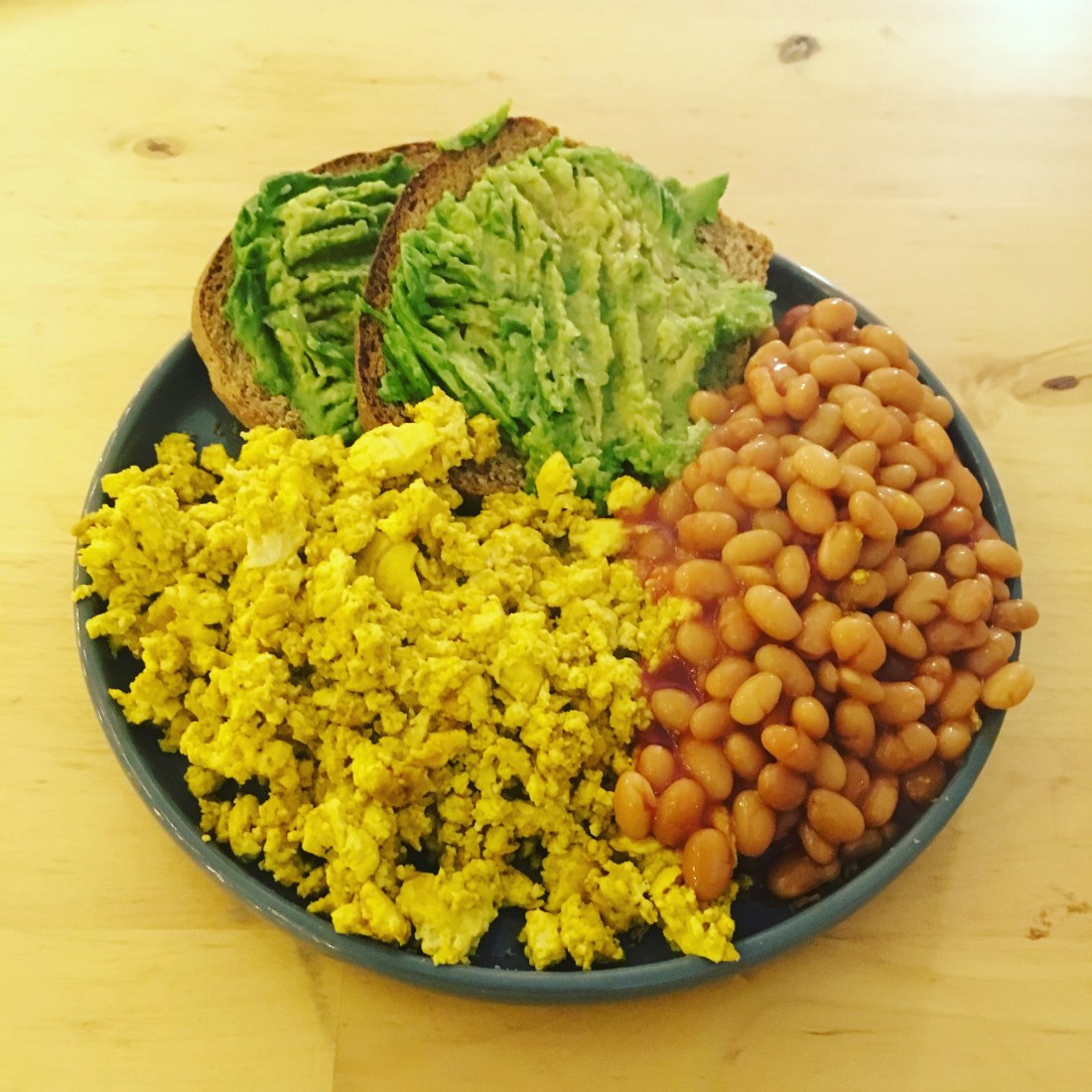
Scrambled eggs: crumble tofu with nutritional yeast, turmeric and cumin, and fry in a pan for ten minutes.
Boiled/Fried eggs: These are pretty impossible to replace unless you spend a lot of time at it, so use context to judge what would work best. For example, if you’re making shakshouka, use fried disks of polenta to replace the eggs on top.
What about nutrition?
People tend to worry most about iron and calcium when they reduce animal products in their diet; but these are actually pretty easy to keep topped up if you eat greens, nuts and seeds, and lots of veggies and legumes. B12 is the only nutrient that is pretty impossible to get from plant based food, as it lives in the soil which we all wash off our veggies before we eat them. However, if you buy plant-based milk or cereal, these tend to be fortified with B12 (among other vitamins); so if you eat these things daily, you’re probably fine. If not, buy a bottle of B12 pills and take one whenever you remember.






 Act Aware